How to Arrive July 20 2026
PR2 takes place at the Taylor Institute for Teaching and Learning (TI) on the University of Calgary campus (434 Collegiate Blvd NW). Upon entering the building, look for the room Beaver (TI-110). For more info, see PETS 2026 Venue instructions.

Overview
Regulators and lawmakers can only do so much to hold tech companies accountable. Enforcement agencies and the people they protect need help. One problem is that the inner workings of large organizations and complex algorithmically-driven systems remain obscure and opaque while their privacy representations are voluminous and vague. As described in a recent journal article, we argue that bringing together technologists and policy experts can help improve accountability, where academic researchers can play a larger role in privacy enforcement and policymaking.
Examples of relevant opportunities include automatically surfacing a company's privacy representations and statements, measuring the actual behavior of their systems with respect to algorithms, user interfaces, and data processing, and identifying risks and harms for newly deployed technologies. To make progress toward closing the gap between academic research and policy, we need to focus on building an interdisciplinary community that incorporates myriad stakeholders in each domain, instead of one-off and unilateral efforts by each domain. This workshop continues to build this community to address this gap.
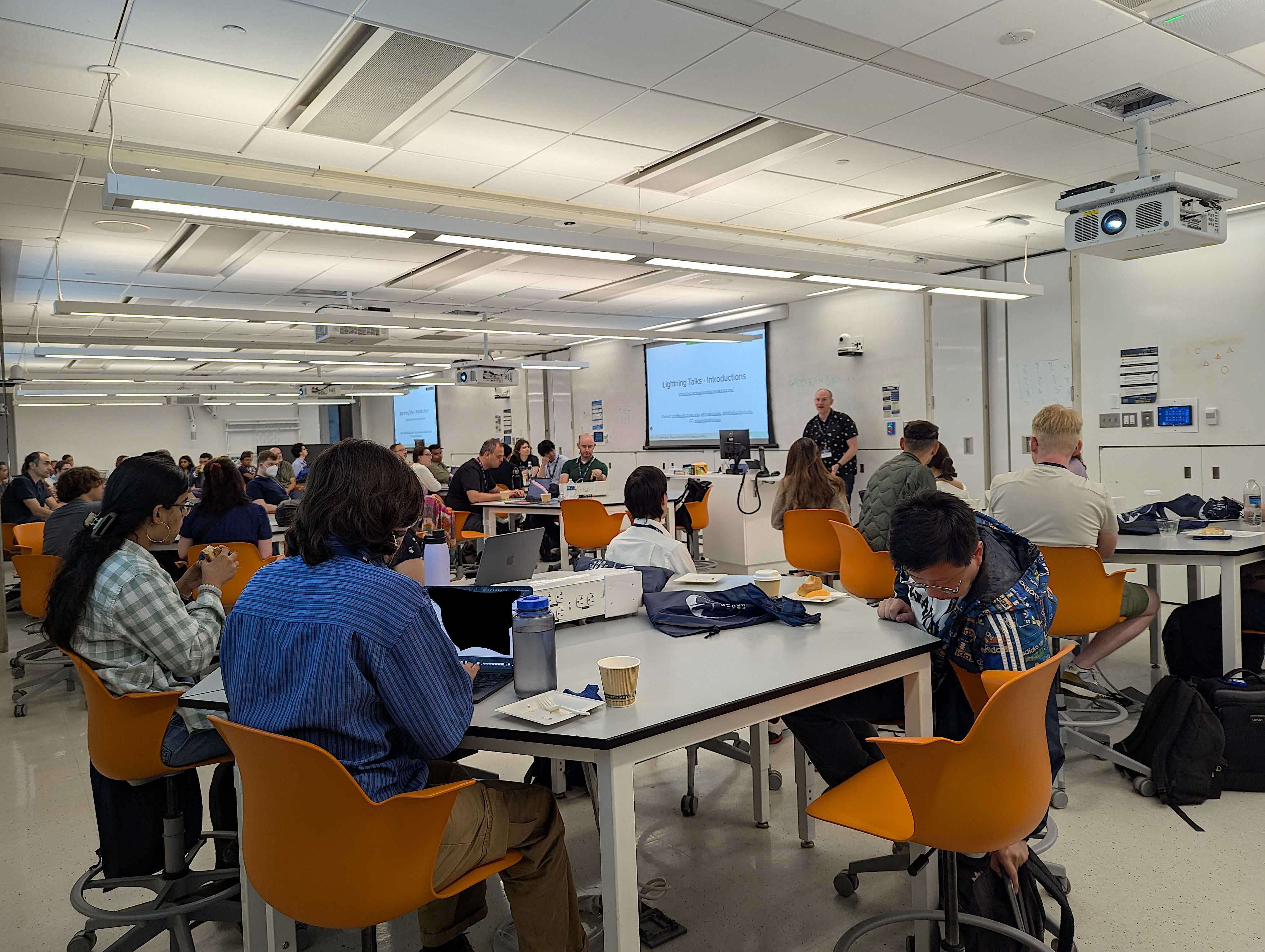
In this workshop, we will bring together a multi-disciplinary group of researchers trained in computer science, engineering, and law to explore how researchers can support the movement for tech accountability. We expect the discussions at the workshop to improve knowledge transfer and collaboration both from academic researchers to policy experts (e.g., via explorations of recent papers relevant to privacy research in an interactive environment) and from policy experts to academic researchers (e.g., by covering how to most effectively go public with findings, how to work with regulators, how to contribute to Unfair, Deceptive, or Abusive Acts or Practice ("UDAAP") complaints and lawsuits, and how to take advantage of data subject rights). Through a combination of keynote presentations, panels, and multiple interactive breakout sessions, we intend to grow the community around this opportunity for interdisciplinary collaboration—one that we hope will have impact not only through more policy-relevant research being published in the PETS community, but also through more effective outcomes such as enforcement actions and law/rulemaking.
Schedule
Monday, July 20, 2026 · Calgary, Canada
-
8:30–9:00 MDTMorning Coffee
-
9:00–9:15 MDTWelcome Remarks
-
 Umar Iqbal
Washington University in St. Louis
Umar Iqbal
Washington University in St. Louis
-
 Hieu Le
Independent Researcher
Hieu Le
Independent Researcher
-
 Konrad Kollnig
Maastricht University
Konrad Kollnig
Maastricht University
-
-
9:15–9:45 MDTParticipant Introductions
-
9:45–10:45 MDT
-
10:45–11:00 MDTBreak
-
11:00–12:00 MDT
Session Moderator: Hieu Le
-
12:00–13:00 MDTLunch
-
13:00–14:00 MDT

-
14:00–14:30 MDTBreak
-
14:30–15:30 MDT
-
15:30–15:45 MDTBreak
-
15:45–16:45 MDT
Session Moderator: Konrad Kollnig
-
16:45–17:00 MDTSummary and Wrap Up
Call for Talks Closed
Submissions are closed. The call for talks closed on May 15, 2026. Accepted talks are listed in the tentative schedule.
This year, PR2 will accept short proposals describing research ideas. Each submission should include a title and an abstract (500 words max) describing the motivation for and the core idea of the proposed work. Proposals may represent projects at various stages of development, ranging from early ideas to completed pilot studies or previously published work. They may also serve to provoke discussion or encourage new research directions within the PR2 community.
Example proposals (inspired from ConPro):
- Research idea: A project in the ideation stage or supported by early pilot studies.
- Work in progress: Research that has progressed beyond the initial concept but is not yet complete.
- Research highlight: Completed work that may be unpublished or already published and is presented to share results and stimulate discussion with the PR2 community.
- Call to action: A discussion highlighting an important problem that warrants further investigation.
- Retrospective: A reflection on a body of prior work, including lessons learned and directions for future research.
Topics of interest include (but are not limited to):
- Transparency and accountability in algorithmic systems
- Identifying and mitigating technology-related harms
- Leveraging legal and regulatory mechanisms for enforcement
- Limits of traditional regulatory oversight
- Building interdisciplinary communities for tech policy impact
These proposals provide authors with an opportunity to present and refine their ideas with the PR2 community, gather feedback on research challenges, build collaborations around emerging ideas or initiatives, or form groups to develop larger research proposals.
Submissions will be evaluated based on the impact, novelty, and feasibility of the proposed idea. Proof-of-concept or preliminary results are not required. Proposals that would benefit from or require interdisciplinary collaboration are particularly encouraged.
See below for workshop format and submission details.
Workshop Format
The workshop is organized as an in-person, one-day event focusing on discussing opportunities for collaborations between policymakers and academic researchers in the PETS community.
At least one author of each accepted research proposal is expected to present the work at the workshop. Presentations will follow a short conference-style format (5-10 minutes) and will be followed by roundtable discussion and feedback from workshop participants. Additional details regarding presentation logistics, including speaking times, will be provided after author notifications.
Research proposals will be reviewed for acceptance, but the workshop will not have formal proceedings. Only the titles and abstracts of accepted proposals will be posted on the workshop website, and authors will be asked to provide these in plain text format. Authors are free to submit or present work discussed at PR2 2026 in other venues after the workshop, subject to the policies of those venues.
The workshop will also include one or two invited panel discussions, each lasting approximately one hour. Panelists will be invited by the organizers, and these sessions will focus on key topics and open questions relevant to the PR2 community.
Instructions for Submission
Acceptance notifications were sent by May 29, 2026.
Attend
We welcome all community members who identify either as technologists working on privacy research or policy-focused individuals.
Examples of relevant areas include:
- Researchers currently doing (or planning to do) policy-relevant privacy research (e.g., many PETS attendees)
- Technologists (i.e., those who are generally in CS and engineering fields)
- Policy experts (e.g., faculty in relevant disciplines — including but not limited to law and CS, members of relevant think tanks)
- Current and former government staffers
- Relevant industry staff (e.g., privacy technology companies, or members of privacy units within tech companies)
Organizers
Steering Committee

Contact
Email the PR2 Organizers at pr2technologypolicyworkshop@proton.me.